Thinking about HubSpot CRM Pricing? You’re not alone. Thousands of businesses are weighing costs, features, and scalability before making a move. Let’s cut through the noise and reveal exactly what you’re paying for—and whether it’s worth it.
Understanding HubSpot CRM Pricing Structure in 2024

HubSpot CRM Pricing has evolved significantly over the years, shifting from a simple free tool to a multi-tiered ecosystem that caters to startups, mid-sized companies, and enterprise-level organizations. The platform now offers a blend of free access and paid tiers across Sales, Marketing, Service, CMS, and Operations Hubs. Understanding how these tiers are structured is the first step toward making an informed decision.
Free vs. Paid Tiers: What’s Included?
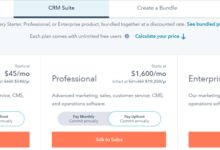
At its core, HubSpot offers a robust free CRM that includes contact management, deal tracking, task automation, and basic reporting. This is ideal for solopreneurs or small teams just getting started. However, when you dive into HubSpot CRM Pricing for advanced features, you’ll find four main paid tiers: Starter, Professional, and Enterprise, available for each hub.
- Free CRM: Contact & company management, deal pipelines, email tracking, meeting scheduling
- Starter: $15–$50/month (billed annually), adds basic automation and limited reporting
- Professional: $800–$3,200/month depending on hub and contacts, includes advanced workflows, A/B testing, and custom reporting
- Enterprise: $3,200+/month, offers AI-powered tools, custom objects, and service-level agreements
It’s important to note that pricing is not flat—it scales with the number of contacts and the hub(s) you choose. For example, the Marketing Hub Professional plan starts at $800/month for up to 1,000 contacts, but jumps significantly as your database grows.
Hub-Specific Pricing Breakdown
One of the complexities of HubSpot CRM Pricing is that each hub operates on its own pricing model. You don’t have to buy all hubs at once, but integration benefits increase when they’re used together.
- Sales Hub: Focuses on pipeline management, email automation, and call tracking. Professional tier includes sequences and meeting analytics.
- Marketing Hub: Offers email campaigns, landing pages, social media scheduling, and lead nurturing. Enterprise adds predictive lead scoring.
- Service Hub: Includes ticketing, knowledge base, customer feedback, and live chat. Higher tiers unlock AI chatbots.
- CMS Hub: Powers websites and blogs with drag-and-drop editors and SEO tools. Enterprise supports multi-language sites.
- Operations Hub: Centralizes data, automates syncing, and enforces data quality. Critical for large teams.
For a full breakdown, visit HubSpot’s official pricing page.
Hidden Costs in HubSpot CRM Pricing
While HubSpot advertises transparent pricing, there are several hidden or indirect costs users often overlook:
Contact Overages: Exceeding your contact limit can trigger automatic upgrades or overage fees.Implementation & Onboarding: While not mandatory, many businesses hire consultants or agencies to set up workflows, costing $2,000–$10,000.Training & Adoption: Internal training programs or HubSpot Academy certifications add time and resource costs..
Third-Party Integrations: Some apps in the HubSpot App Marketplace require separate subscriptions.”The real cost of HubSpot isn’t just the monthly fee—it’s the time and expertise needed to use it effectively.” — CRM Consultant, Boston-based Agency
HubSpot CRM Pricing Tiers: A Deep Dive into Each Plan
To truly understand HubSpot CRM Pricing, we need to dissect each tier across the core hubs.Let’s explore what you get—and what you might be missing—at every level..
Sales Hub: From Starter to Enterprise
The Sales Hub is one of the most widely adopted tools in the HubSpot ecosystem. It’s designed to streamline outreach, track deals, and improve team productivity.
- Starter ($15–$50/month): Includes email automation, deal pipelines, and basic reporting. Best for small sales teams.
- Professional ($800/month): Adds sequences with personalization, meeting analytics, and custom reporting. Ideal for scaling teams.
- Enterprise ($3,200/month): Offers AI-powered insights, advanced permissions, and custom objects. Built for complex sales processes.
One standout feature in the Professional and Enterprise tiers is Sales Sequences, which allows automated, multi-channel outreach (email, calls, tasks). However, sequence limits apply—Enterprise removes these caps.
Marketing Hub: Is the Investment Worth It?
Marketing Hub is where HubSpot shines for digital marketers. From email campaigns to SEO tools, it’s a full-stack solution—but at a premium price.
- Starter ($50/month): Basic email marketing, forms, and landing pages. Limited A/B testing.
- Professional ($800/month): Full A/B testing, smart content, and lead nurturing workflows.
- Enterprise ($3,200/month): Predictive content, custom behavioral triggers, and advanced analytics.
For businesses running high-volume campaigns, the Professional tier is often the minimum viable option. The free version lacks essential tools like lead scoring and automation, making it insufficient for serious marketing efforts.
Service Hub: Customer Support at Scale
Service Hub turns customer service into a growth engine with ticketing, knowledge bases, and feedback tools.
- Starter ($50/month): Basic ticketing, customer feedback surveys, and SLA management.
- Professional ($800/month): Adds live chat, chatbots, and knowledge base with SEO.
- Enterprise ($3,200/month): AI-powered chatbots, custom reporting, and advanced automation.
One underrated feature is Customer Feedback Surveys, which integrate Net Promoter Score (NPS) directly into the CRM. This allows teams to close the loop on customer satisfaction in real time.
How Contact Limits Impact HubSpot CRM Pricing
One of the most critical—and often misunderstood—factors in HubSpot CRM Pricing is the contact limit. Your pricing tier is directly tied to the number of contacts in your database, and exceeding limits can lead to unexpected costs.
What Counts as a ‘Contact’?
In HubSpot, a contact is any individual with an email address stored in your system. This includes leads, customers, and even bounced emails. Once a contact is created, they remain counted—even if they’re inactive or unsubscribed.
- Contacts are tracked across all hubs.
- Duplicates count separately unless merged.
- Contacts in lists or workflows still count toward your total.
This means poor data hygiene can inflate your contact count and push you into a higher pricing tier unnecessarily.
Scaling Costs with Contact Growth
Let’s look at a real-world example. The Marketing Hub Professional plan costs $800/month for up to 1,000 contacts. But if you grow to 2,000 contacts, the price jumps to $1,200/month. At 5,000 contacts, it’s $2,400/month.
- 1,000 contacts: $800/month
- 2,000 contacts: $1,200/month
- 5,000 contacts: $2,400/month
- 10,000 contacts: $3,200/month
This exponential growth can be a shock for fast-growing startups. Unlike some CRMs that charge per user, HubSpot charges per contact, making it less predictable for marketing-heavy businesses.
Strategies to Manage Contact Limits
To avoid overages, consider these strategies:
- Regular Data Cleansing: Archive or delete inactive contacts (HubSpot allows archiving without losing history).
- Use Lists Wisely: Avoid adding all contacts to active workflows—only include those in current campaigns.
- Leverage GDPR Tools: Comply with data regulations by removing contacts who haven’t engaged in 12+ months.
- Segment Early: Create lifecycle stages (e.g., Subscriber, Lead, Customer) to manage visibility and automation.
“We reduced our contact count by 30% just by cleaning up old leads—saving over $9,000 annually.” — CMO, SaaS Startup
HubSpot CRM Pricing vs. Competitors: Is It Worth It?
When evaluating HubSpot CRM Pricing, it’s essential to compare it with alternatives like Salesforce, Zoho CRM, and Pipedrive. Each has its strengths, but HubSpot stands out for usability and integration.
Salesforce: Power vs. Complexity
Salesforce is the enterprise giant, offering unmatched customization and scalability. However, its learning curve is steep, and implementation costs are high.
- Salesforce Sales Cloud: Starts at $25/user/month (Essential) to $300/user/month (Unlimited).
- Requires admin training, often needing third-party consultants.
- Better for large enterprises with dedicated IT teams.
While Salesforce may be cheaper per user, total cost of ownership (TCO) often exceeds HubSpot due to customization needs.
Zoho CRM: Budget-Friendly Alternative
Zoho CRM is a strong contender for small to mid-sized businesses looking for affordability.
- Free plan for up to 3 users.
- Premium plans start at $14/user/month (Standard) to $52/user/month (Enterprise).
- Includes AI assistant (Zia), workflow automation, and multichannel communication.
Zoho wins on price, but HubSpot offers a more intuitive interface and better onboarding experience. For teams prioritizing ease of use, HubSpot is often worth the premium.
Pipedrive: Sales-First Simplicity
Pipedrive focuses exclusively on sales pipeline management, making it ideal for sales-driven teams.
- Essential plan: $14.90/user/month
- Advanced: $27.90/user/month
- Professional: $49.90/user/month
Pipedrive is significantly cheaper than HubSpot’s Sales Hub, but lacks built-in marketing and service tools. If you only need CRM and pipeline tracking, Pipedrive is a leaner option.
Custom Quotes and Enterprise Negotiation in HubSpot CRM Pricing
For businesses with complex needs, HubSpot offers custom enterprise pricing. Unlike the standard tiers, these plans are negotiated and can include tailored features, SLAs, and onboarding support.
When to Request a Custom Quote
You should consider a custom quote if:
- Your contact count exceeds 40,000.
- You need multi-hub integration (e.g., Marketing + Sales + Service).
- You require dedicated account management or onboarding.
- You’re a global company needing data residency compliance.
HubSpot’s sales team can provide volume discounts, bundled pricing, and extended contracts (e.g., 2-year commitments for 15–20% savings).
What’s Included in Enterprise Deals?
Enterprise agreements often include:
HubSpot CRM Pricing – HubSpot CRM Pricing menjadi aspek penting yang dibahas di sini.
- Dedicated Customer Success Manager
- Priority support (24/7 with SLA)
- Custom training and onboarding
- Advanced security and compliance (GDPR, SOC 2)
- API rate limit increases
These perks can justify the high base price, especially for companies relying on HubSpot as their central tech stack.
How to Negotiate Better Terms
While HubSpot rarely advertises discounts, negotiation is possible. Tips include:
- Billing annually instead of monthly (saves ~17%)
- Committing to multi-year contracts
- Requesting free training or onboarding credits
- Asking for extended trial periods for new hubs
Some customers report success by leveraging competitor quotes (e.g., Salesforce or Zoho) during negotiations.
Hidden Features That Add Value to HubSpot CRM Pricing
Beyond the advertised tools, HubSpot includes several underutilized features that enhance the value of its pricing model.
HubSpot Academy: Free Certification & Training
One of the biggest hidden values in HubSpot CRM Pricing is access to HubSpot Academy. It offers free, certification-based courses in inbound marketing, sales, CRM administration, and customer service.
- Over 80 free courses available
- Certifications boost team credibility
- Content is updated regularly with platform changes
This reduces the need for external training and accelerates user adoption.
App Marketplace & Integrations
The HubSpot App Marketplace offers 1,000+ integrations with tools like Slack, Shopify, Zoom, and Google Workspace. Many are free or low-cost, extending functionality without increasing core CRM costs.
- Free integrations: Gmail, Outlook, Facebook Ads
- Paid apps: Salesforce sync ($49/month), Surveymonkey ($20/month)
- Custom integrations via API (developer required)
This ecosystem allows businesses to tailor HubSpot to their stack without overpaying for unused features.
Reporting and Analytics Dashboard
HubSpot’s native reporting tools are powerful, especially in Professional and Enterprise tiers. You can create custom dashboards tracking KPIs like:
- Sales pipeline velocity
- Marketing ROI by campaign
- Customer support resolution time
- Website conversion rates
These insights help justify the cost by showing measurable ROI across departments.
Common Misconceptions About HubSpot CRM Pricing
Despite its popularity, several myths persist about HubSpot CRM Pricing that can mislead potential buyers.
“The Free CRM Is Limited”
While the free CRM lacks automation and advanced reporting, it’s far more capable than most realize. It includes:
- Unlimited contacts (yes, really)
- Unlimited users
- Email tracking and meeting scheduling
- Basic deal and task management
For solopreneurs or early-stage startups, the free plan can be sufficient for months—or even years.
“HubSpot Is Only for Marketers”
HubSpot began as a marketing tool, but today it’s a full CRM platform. The Sales and Service Hubs are robust and used by thousands of sales teams globally. Its unified inbox, sequences, and pipeline management rival dedicated sales tools.
“We switched from Salesforce to HubSpot because our sales team actually used it.” — VP of Sales, Tech Company
“You Have to Buy All Hubs Together”
You can start with just the Sales Hub and add Marketing or Service later. HubSpot encourages modular adoption, allowing businesses to scale features as needed. This flexibility makes it easier to manage costs over time.
Real-World Case Studies: How Businesses Use HubSpot CRM Pricing
Let’s look at how real companies leverage HubSpot CRM Pricing to drive growth.
Startup Example: Scaling from Free to Professional
A B2B SaaS startup began with HubSpot’s free CRM to manage leads and deals. After 18 months, they hit 2,500 contacts and needed automation. They upgraded to Sales Hub Professional ($800/month) and Marketing Hub Starter ($50/month), totaling $850/month. The result? A 40% increase in lead conversion within 6 months.
Mid-Market Example: Multi-Hub Integration
A 50-person agency uses Sales, Marketing, and Service Hubs at the Professional tier. Total cost: ~$2,400/month. They use workflows to auto-assign tickets, nurture leads, and report on client ROI. The unified platform reduced tool sprawl and improved team alignment.
Enterprise Example: Custom Enterprise Deal
A global e-commerce brand with 100,000+ contacts negotiated a custom Enterprise deal. They received a 20% discount for a 2-year commitment, dedicated support, and custom training. While the base cost was high, the ROI from automated campaigns and improved customer retention justified the investment.
Is HubSpot CRM Pricing worth it?
Yes, if you value ease of use, integration, and scalability. The upfront cost is higher than some competitors, but the long-term ROI—especially in team productivity and customer retention—often outweighs the price.
Can I switch plans anytime?
Yes. HubSpot allows you to upgrade or downgrade at any time. Downgrades take effect at the end of your billing cycle, and upgrades are prorated.
Does HubSpot offer nonprofit discounts?
Yes. HubSpot offers up to 50% off for registered nonprofits through its Nonprofit Program.
Are there setup fees?
No mandatory setup fees. However, optional onboarding services or agency help may incur costs.
Can I get a free trial?
Yes. HubSpot offers 14-day free trials for all paid plans, no credit card required.
In conclusion, HubSpot CRM Pricing is not just about the monthly fee—it’s about the value you extract from the platform. From its intuitive interface to powerful automation and seamless hub integration, HubSpot delivers a premium experience. While the cost can escalate with contact growth, strategic planning, data hygiene, and negotiation can keep it manageable. Whether you’re a solo entrepreneur or a global enterprise, understanding the nuances of HubSpot CRM Pricing ensures you get the most out of your investment.
HubSpot CRM Pricing – HubSpot CRM Pricing menjadi aspek penting yang dibahas di sini.
Further Reading:
