In today’s hyper-competitive business landscape, an enterprise CRM with advanced workflow automation isn’t just a luxury—it’s a necessity. Discover how top companies are streamlining operations, boosting productivity, and driving revenue like never before.

What Is an Enterprise CRM with Advanced Workflow Automation?

An enterprise CRM with advanced workflow automation is a robust customer relationship management system designed for large-scale organizations. It integrates sales, marketing, customer service, and data analytics into a unified platform, while leveraging automation to eliminate manual tasks, reduce errors, and accelerate business processes.
Core Components of Enterprise CRM Systems
Modern enterprise CRM platforms are built on several foundational components that ensure scalability, security, and seamless integration across departments. These include centralized customer databases, role-based access controls, omnichannel communication tools, and real-time reporting dashboards.
- Centralized customer data repository for unified insights
- AI-powered analytics and predictive modeling
- Integration with ERP, marketing automation, and support systems
These components work in synergy to provide a 360-degree view of the customer journey, enabling personalized engagement at scale. According to Gartner’s Market Guide for CRM Applications, enterprises that deploy integrated CRM solutions see up to 30% improvement in customer retention rates.
Understanding Workflow Automation in CRM
Workflow automation within an enterprise CRM with advanced workflow automation refers to the use of rules, triggers, and conditional logic to automate repetitive tasks. This includes lead assignment, follow-up emails, task creation, approval routing, and data synchronization across systems.
- Automated lead scoring and routing based on behavior
- Dynamic task generation from customer interactions
- Self-updating records without manual input
“Automation doesn’t replace humans; it empowers them to focus on high-value activities.” — Salesforce Research, 2023
For example, when a high-intent lead downloads a whitepaper, the system can automatically assign the lead to a sales rep, schedule a follow-up call, and trigger a nurture email sequence—all without human intervention.
Top 7 Benefits of Enterprise CRM with Advanced Workflow Automation
Deploying an enterprise CRM with advanced workflow automation delivers transformative advantages across the organization. From operational efficiency to strategic decision-making, these systems are redefining how enterprises engage with customers and manage internal processes.
1. Dramatically Improved Operational Efficiency
One of the most immediate impacts of an enterprise CRM with advanced workflow automation is the reduction of manual, time-consuming tasks. Sales teams no longer need to manually log calls or update deal stages, while marketing can automate campaign triggers based on user behavior.
- Reduction in data entry errors by up to 65% (McKinsey, 2022)
- Up to 40% faster sales cycle completion
- Automated invoice generation and contract approvals
For instance, a global financial services firm reduced its onboarding time from 14 days to under 48 hours by automating document collection, verification, and approval workflows within their CRM.
2. Enhanced Sales Team Productivity
Sales representatives spend less than 40% of their time actually selling, according to CSO Insights. An enterprise CRM with advanced workflow automation changes this by automating administrative burdens.
- Auto-scheduling of follow-ups based on lead engagement
- Smart reminders for contract renewals and upsell opportunities
- Real-time alerts for high-priority leads
With automated task management, reps can focus on building relationships and closing deals. One tech company reported a 27% increase in quota attainment after implementing automated lead routing and activity tracking.
3. Superior Customer Experience and Personalization
Customers expect personalized, timely interactions. An enterprise CRM with advanced workflow automation enables hyper-personalization by leveraging customer data, behavioral triggers, and AI-driven insights.
- Dynamic content delivery based on customer lifecycle stage
- Automated birthday and milestone greetings with personalized offers
- Proactive service alerts before issues arise
For example, a telecommunications provider uses automated workflows to detect customers with repeated service calls and automatically triggers a retention offer with a dedicated account manager—reducing churn by 18%.
Key Features to Look for in an Enterprise CRM with Advanced Workflow Automation
Not all CRM systems are created equal. When selecting an enterprise CRM with advanced workflow automation, certain features are non-negotiable for scalability, integration, and long-term success.
AI-Powered Insights and Predictive Analytics
Modern enterprise CRMs go beyond basic reporting. They use machine learning to predict customer behavior, forecast sales, and recommend next-best actions.
- Predictive lead scoring to prioritize high-conversion prospects
- Churn prediction models based on engagement patterns
- Revenue forecasting with 90%+ accuracy
According to a study by IBM, companies using AI in CRM see a 26% increase in sales conversion rates.
Robust Integration Capabilities
An enterprise CRM with advanced workflow automation must seamlessly connect with existing systems like ERP, HRIS, marketing platforms, and legacy databases.
- Pre-built connectors for SAP, Oracle, Microsoft Dynamics
- API-first architecture for custom integrations
- Real-time data sync across platforms
Without strong integration, data silos persist, undermining automation efforts. A manufacturing giant integrated its CRM with its supply chain system, enabling automatic inventory checks during sales negotiations—reducing order fulfillment errors by 32%.
Customizable Workflow Builder
A drag-and-drop workflow designer allows non-technical users to create, modify, and monitor automation rules without coding.
- Visual workflow editor with conditional branching
- Approval chains for contract and pricing changes
- Multi-channel triggers (email, SMS, web forms)
This flexibility ensures that business processes can evolve without IT dependency. A healthcare provider automated patient intake by linking online forms to appointment scheduling and insurance verification—cutting administrative load by 50%.
How Enterprise CRM with Advanced Workflow Automation Transforms Sales
Sales is often the primary beneficiary of an enterprise CRM with advanced workflow automation. From lead generation to post-sale follow-up, automation reshapes the entire sales lifecycle.
Automated Lead Management and Nurturing
Manual lead handling leads to delays and missed opportunities. Automation ensures every lead is engaged promptly and nurtured according to predefined strategies.
- Instant lead capture from websites, social media, and events
- Behavior-based segmentation and tagging
- Drip email campaigns triggered by user actions
A B2B software company increased lead-to-meeting conversion by 41% by automating lead scoring and assigning high-scoring leads to senior reps within minutes of form submission.
Intelligent Deal Tracking and Forecasting
Traditional forecasting is often guesswork. With an enterprise CRM with advanced workflow automation, forecasting becomes data-driven and dynamic.
- Real-time deal stage updates based on email and call activity
- AI-powered risk assessment for stalled deals
- Automated forecast roll-ups for executive reporting
One global retailer reduced forecast variance from 35% to under 8% after implementing automated deal tracking powered by email sentiment analysis and engagement metrics.
Revolutionizing Marketing with Enterprise CRM Automation
Marketing teams gain unprecedented precision and efficiency when leveraging an enterprise CRM with advanced workflow automation. Campaigns become more targeted, measurable, and scalable.
Behavior-Triggered Campaigns
Instead of batch-and-blast emails, modern marketing uses real-time customer behavior to trigger personalized messages.
- Abandoned cart emails with dynamic product recommendations
- Re-engagement campaigns for inactive users
- Event-triggered content delivery (e.g., post-purchase tutorials)
A fashion e-commerce brand saw a 63% increase in email click-through rates by automating personalized product suggestions based on browsing history and past purchases.
Cross-Channel Campaign Orchestration
An enterprise CRM with advanced workflow automation enables seamless coordination across email, SMS, social media, and ads.
- Unified customer journey mapping across channels
- Automated A/B testing and optimization
- Centralized performance dashboards
By synchronizing campaigns across platforms, a travel company achieved a 29% higher ROI on digital ad spend and reduced customer acquisition costs by 22%.
Customer Service Excellence Through Automation
Customer service is no longer reactive—it’s proactive and predictive, thanks to an enterprise CRM with advanced workflow automation.
Automated Ticket Routing and Resolution
When a customer submits a support request, automation ensures it’s routed to the right agent with full context.
- NLP-powered ticket categorization
- SLA-based escalation rules
- Knowledge base suggestions for faster resolution
A SaaS provider reduced average response time from 12 hours to under 30 minutes by automating ticket classification and routing based on issue type and customer tier.
Proactive Support and Self-Service
Automation enables companies to anticipate issues before they escalate.
- Automated health checks for active customers
- Chatbots with CRM integration for instant answers
- Automated renewal reminders and license updates
One fintech company uses automated workflows to detect unusual login patterns and instantly sends security alerts—improving trust and reducing fraud incidents by 40%.
Implementation Strategies for Enterprise CRM with Advanced Workflow Automation
Deploying an enterprise CRM with advanced workflow automation requires careful planning, change management, and continuous optimization.
Phased Rollout Approach
Instead of a big-bang launch, successful implementations use a phased approach.
- Pilot with a single department (e.g., sales)
- Refine workflows based on feedback
- Scale to marketing, service, and operations
A multinational logistics firm rolled out its CRM in three phases over six months, achieving 92% user adoption—compared to 58% in previous failed attempts.
Data Migration and Cleansing
Poor data quality undermines automation. Before go-live, enterprises must clean, deduplicate, and standardize data.
- Use AI tools to identify and merge duplicate records
- Establish data governance policies
- Validate data integrity post-migration
One bank discovered 1.2 million duplicate customer records during migration. After cleansing, their automated marketing campaigns saw a 37% increase in engagement.
Training and Change Management
Technology is only as effective as user adoption. Comprehensive training ensures teams embrace the new system.
- Role-specific training modules
- Ongoing support via internal champions
- Feedback loops for continuous improvement
Companies that invest in change management see 3x higher ROI on CRM implementations, according to McKinsey.
Future Trends in Enterprise CRM with Advanced Workflow Automation
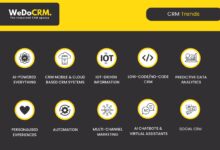
The evolution of enterprise CRM with advanced workflow automation is accelerating, driven by AI, low-code platforms, and hyper-personalization.
AI and Generative AI Integration
Future CRMs will use generative AI to draft emails, summarize customer interactions, and suggest responses in real time.
- AI-generated sales proposals based on deal history
- Automated meeting summaries from call transcripts
- Predictive content creation for marketing
Salesforce’s Einstein GPT is already enabling sales teams to generate personalized emails in seconds, reducing drafting time by 80%.
Low-Code and No-Code Automation
Business users will increasingly build complex workflows without coding, using intuitive drag-and-drop interfaces.
- Self-service automation for marketing and HR teams
- Pre-built templates for common processes
- Version control and audit trails
Microsoft Power Automate and Zoho Flow are leading this trend, empowering non-technical users to automate workflows across departments.
Hyper-Personalization at Scale
Next-gen CRMs will deliver individualized experiences to millions of customers simultaneously.
- Real-time personalization based on location, device, and mood
- Dynamic pricing and offers powered by AI
- Emotion detection in customer service calls
Amazon and Netflix already use similar models; soon, every enterprise CRM with advanced workflow automation will offer this capability.
What is an enterprise CRM with advanced workflow automation?
An enterprise CRM with advanced workflow automation is a comprehensive customer relationship management system designed for large organizations. It combines centralized customer data with automated business processes—such as lead routing, task management, and campaign execution—to improve efficiency, accuracy, and customer experience.
How does workflow automation improve sales productivity?
Workflow automation reduces manual tasks like data entry, follow-up scheduling, and report generation. This allows sales teams to focus on selling, leading to faster deal cycles, higher conversion rates, and improved quota attainment.
Can small businesses use enterprise CRM systems?
While enterprise CRMs are built for large organizations, many platforms offer scalable editions. However, small businesses may find mid-market or SMB-focused CRMs more cost-effective and easier to implement.
What are the risks of poor CRM implementation?
Poor implementation can lead to low user adoption, data silos, workflow bottlenecks, and wasted investment. Success requires clear goals, data hygiene, training, and ongoing optimization.
Which CRM platforms offer the best workflow automation?
Top platforms include Salesforce Sales Cloud, Microsoft Dynamics 365, HubSpot Enterprise, Zoho CRM Plus, and Oracle CX. Each offers robust automation tools, AI insights, and integration capabilities tailored for enterprise needs.
An enterprise CRM with advanced workflow automation is no longer optional—it’s the backbone of modern business success. From boosting sales productivity to delivering exceptional customer experiences, these systems drive efficiency, accuracy, and growth. By understanding key features, implementation strategies, and future trends, enterprises can unlock their full potential and stay ahead in a rapidly evolving market.
Further Reading:
