In today’s hyper-connected business landscape, an enterprise CRM with advanced role based access control isn’t just a luxury—it’s a necessity. It empowers organizations to secure data, streamline workflows, and boost productivity across departments—all while maintaining strict compliance and governance.
Understanding Enterprise CRM with Advanced Role Based Access Control

An enterprise CRM with advanced role based access control is a sophisticated customer relationship management system designed for large-scale organizations. Unlike generic CRM platforms, it integrates granular security protocols that allow administrators to define precisely who can access, edit, or delete specific data based on their organizational role.
What Sets Enterprise CRM Apart from Standard CRM?
Standard CRM systems are often built for small to mid-sized businesses and lack the scalability, integration capabilities, and security depth required by large enterprises. An enterprise CRM with advanced role based access control, on the other hand, is engineered to handle vast datasets, complex user hierarchies, and mission-critical operations.
- Handles thousands of users and millions of customer records.
- Supports multi-geography and multi-department operations.
- Offers deep integration with ERP, marketing automation, and analytics tools.
According to Gartner’s Market Guide for Sales CRM, enterprise CRMs are increasingly expected to deliver not just functionality but also robust security and compliance features.
The Core of Role Based Access Control (RBAC)
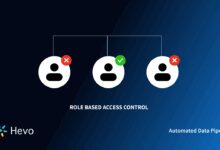
Role Based Access Control (RBAC) is a security model where access permissions are assigned based on a user’s role within the organization. In an enterprise CRM with advanced role based access control, this means that a sales representative won’t see financial data, and a customer support agent won’t have access to strategic sales forecasts.
- Roles are predefined (e.g., Sales Manager, HR Admin, Customer Support).
- Permissions are assigned at the role level, not per individual.
- Reduces administrative overhead and minimizes human error.
“RBAC is not just about security—it’s about operational efficiency. When users only see what they need, decision-making becomes faster and more accurate.” — NIST Special Publication 800-53
Why Advanced RBAC is Critical in Enterprise CRM
As businesses grow, so does the complexity of data management. An enterprise CRM with advanced role based access control ensures that sensitive customer, financial, and operational data remains protected while still being accessible to authorized personnel.
Preventing Data Breaches and Insider Threats
One of the biggest risks in large organizations is insider threats—employees with excessive access who may accidentally or maliciously expose data. Advanced RBAC mitigates this by enforcing the principle of least privilege.
- Limits access to only necessary data fields and modules.
- Logs all access attempts for audit trails.
- Supports integration with identity and access management (IAM) systems.
For example, a study by Verizon’s 2023 Data Breach Investigations Report found that 74% of breaches involved human elements, including misuse of privileges. Implementing an enterprise CRM with advanced role based access control can significantly reduce this risk.
Ensuring Compliance with Global Regulations
Enterprises operating across borders must comply with regulations like GDPR, HIPAA, CCPA, and SOX. These laws mandate strict control over who can access personal and sensitive data.
- GDPR requires data minimization and purpose limitation—RBAC supports both.
- HIPAA compliance in healthcare CRMs demands strict access logs and user authentication.
- SOX compliance in finance requires segregation of duties, which RBAC enforces.
An enterprise CRM with advanced role based access control provides the framework to meet these requirements through automated access policies and real-time monitoring.
Key Features of an Enterprise CRM with Advanced Role Based Access Control
Not all CRMs offer true advanced RBAC. To qualify, a system must go beyond basic user roles and provide dynamic, context-aware access management. Here are the essential features to look for.
Granular Permission Levels
Advanced RBAC allows permissions to be set at multiple levels: module, record, field, and even action (view, edit, delete, share). This level of detail is crucial in large organizations where data sensitivity varies widely.
- Field-level security: Hide sensitive fields (e.g., credit card numbers) from unauthorized users.
- Record-level access: Control who can view specific customer accounts or opportunities.
- Action-based permissions: Define whether a user can export data or create reports.
For instance, Salesforce’s Sharing Model allows administrators to set up role hierarchies, sharing rules, and permission sets that provide this granularity.
Dynamic Role Assignment and Inheritance
In complex organizations, roles aren’t static. Employees move between departments, take on temporary projects, or work in hybrid roles. An enterprise CRM with advanced role based access control should support dynamic role assignment and inheritance.
- Users can inherit permissions from multiple roles.
- Temporary role elevation for special projects (with expiration).
- Integration with HR systems to auto-update roles upon employee changes.
This flexibility ensures that access remains accurate and up-to-date without constant manual intervention.
Audit Trails and Access Logging
Transparency is key in enterprise environments. Every access event should be logged and available for review. This supports both security investigations and compliance audits.
- Logs include user ID, timestamp, accessed record, and action performed.
- Real-time alerts for suspicious access patterns.
- Exportable reports for compliance submissions.
Microsoft Dynamics 365, for example, offers comprehensive audit logging that tracks all user activities within the CRM.
Top Enterprise CRM Platforms with Advanced RBAC
Several CRM platforms stand out for their robust role-based access control features. Choosing the right one depends on your industry, size, and integration needs.
Salesforce: The Industry Leader in RBAC Flexibility
Salesforce is widely regarded as the gold standard for enterprise CRM with advanced role based access control. Its security model is deeply layered, offering role hierarchies, profiles, permission sets, and sharing rules.
- Role hierarchy allows managers to automatically access their subordinates’ data.
- Permission sets enable granular control without altering profiles.
- Supports custom metadata types for dynamic access policies.
Salesforce also integrates with Okta and Azure AD for centralized identity management, making it ideal for large enterprises.
Microsoft Dynamics 365: Seamless Integration with Microsoft Ecosystem
For organizations already using Microsoft 365, Dynamics 365 offers a natural fit. It provides strong RBAC features and deep integration with Active Directory, Teams, and Power Platform.
- Security roles are defined using a matrix of privileges.
- Field-level security can be enabled for sensitive data.
- Power Automate allows for custom access workflows.
Dynamics 365 is particularly strong in regulated industries like healthcare and finance, where compliance and auditability are paramount.
Oracle CX: Built for Global Enterprises
Oracle’s Customer Experience (CX) suite offers an enterprise CRM with advanced role based access control tailored for multinational corporations. It supports complex organizational structures and multi-language, multi-currency environments.
- Role-based dashboards and UI personalization.
- Integration with Oracle Identity Manager for centralized access control.
- Advanced analytics with role-specific data views.
Oracle CX is ideal for companies with global operations that need consistent yet localized CRM experiences.
Implementing an Enterprise CRM with Advanced RBAC: Best Practices
Deploying an enterprise CRM with advanced role based access control is not just a technical task—it’s a strategic initiative that requires planning, stakeholder alignment, and ongoing management.
Conduct a Comprehensive Access Audit
Before implementation, map out all user roles, data types, and access requirements. Identify who needs access to what, and why.
- Interview department heads to understand workflow needs.
- Classify data by sensitivity (public, internal, confidential, restricted).
- Document existing access policies and gaps.
This audit forms the foundation of your RBAC strategy and ensures that access policies are aligned with business objectives.
Design a Scalable Role Hierarchy
A well-designed role hierarchy prevents permission sprawl and makes management easier. Start with broad roles and refine them as needed.
- Define core roles (e.g., Sales Rep, Manager, Admin).
- Use role inheritance to reduce redundancy.
- Plan for future roles as the company grows.
Avoid creating too many custom roles—this can lead to confusion and security loopholes.
Train Users and Enforce Governance
Even the best system fails without user adoption and governance. Provide training on data handling, access policies, and reporting procedures.
- Conduct role-specific training sessions.
- Establish a governance committee to review access changes.
- Implement periodic access reviews (e.g., quarterly audits).
Regular training ensures that employees understand not just how to use the CRM, but why access controls matter.
Challenges and Pitfalls to Avoid
While an enterprise CRM with advanced role based access control offers immense benefits, it also comes with challenges that must be proactively managed.
Role Explosion and Permission Bloat
One common issue is “role explosion”—creating too many roles, leading to confusion and administrative overhead. This often happens when organizations create a new role for every minor variation in job function.
- Solution: Use permission sets or dynamic roles instead of creating new roles.
- Regularly review and consolidate redundant roles.
- Adopt a role lifecycle management process.
According to a 2022 ISACA report, organizations with more than 500 roles saw a 40% increase in access-related incidents.
Over-Privileged Users and Shadow Roles
Sometimes, users accumulate excessive permissions over time—especially during role changes. These “over-privileged” accounts pose a significant security risk.
- Solution: Implement just-in-time (JIT) access for elevated privileges.
- Use automated deprovisioning when employees leave or change roles.
- Monitor for “shadow roles” created outside official channels.
Regular access certification campaigns help identify and remediate these issues.
Integration Complexity with Legacy Systems
Many enterprises have legacy systems that don’t support modern RBAC standards. Integrating them with a new CRM can be challenging.
- Solution: Use middleware or API gateways to standardize access control.
- Implement single sign-on (SSO) to unify authentication.
- Phase out legacy systems gradually with a clear migration plan.
Without proper integration, data silos and inconsistent access policies can undermine the entire CRM deployment.
Future Trends in Enterprise CRM and Access Control
The landscape of enterprise CRM with advanced role based access control is evolving rapidly, driven by AI, zero trust security, and changing workforce dynamics.
AI-Powered Access Recommendations
Artificial intelligence is being used to analyze user behavior and recommend role assignments or detect anomalies.
- AI can suggest role changes based on job function shifts.
- Machine learning models detect unusual access patterns (e.g., accessing data at odd hours).
- Reduces manual configuration and improves accuracy.
For example, Salesforce Einstein Analytics can help identify access risks and optimize role structures.
Zero Trust Architecture Integration
The zero trust model—“never trust, always verify”—is becoming the new standard for enterprise security. An enterprise CRM with advanced role based access control is a key component of this architecture.
- Requires continuous authentication and device verification.
- Integrates with network-level zero trust policies.
- Supports multi-factor authentication (MFA) at every access point.
As per CISA’s Zero Trust Maturity Model, CRMs must enforce strict access controls regardless of user location.
Remote Work and Decentralized Access
With the rise of remote and hybrid work, access is no longer confined to corporate networks. An enterprise CRM with advanced role based access control must support secure access from any location.
- Location-based access rules (e.g., block access from high-risk countries).
- Device compliance checks before granting access.
- Session monitoring and automatic logout after inactivity.
This ensures that data remains secure even when employees work from home or on the go.
What is an enterprise CRM with advanced role based access control?
An enterprise CRM with advanced role based access control is a customer relationship management system designed for large organizations that enforces strict, granular data access policies based on user roles. It ensures that employees only see the data necessary for their job functions, enhancing security, compliance, and efficiency.
Why is RBAC important in enterprise CRM systems?
RBAC is crucial because it minimizes the risk of data breaches, ensures compliance with regulations like GDPR and HIPAA, and improves operational efficiency by reducing clutter and irrelevant data for users. It also supports auditability and accountability through detailed access logs.
Which CRM platforms offer the best advanced RBAC features?
Salesforce, Microsoft Dynamics 365, and Oracle CX are among the top platforms offering robust role based access control. Salesforce excels in flexibility, Dynamics 365 in Microsoft ecosystem integration, and Oracle CX in global scalability and compliance.
How do I implement RBAC in my enterprise CRM?
Start with an access audit, define clear roles and permissions, design a scalable hierarchy, integrate with identity management systems, train users, and conduct regular access reviews. Avoid role explosion by using permission sets and dynamic roles.
What are the future trends in CRM access control?
Future trends include AI-driven access recommendations, integration with zero trust security models, and enhanced support for remote work through location-based and device-aware access policies. These advancements will make enterprise CRM with advanced role based access control even more intelligent and adaptive.
Deploying an enterprise CRM with advanced role based access control is a strategic move that goes beyond software selection—it’s about building a culture of security, efficiency, and compliance. By understanding the core features, choosing the right platform, and following best practices, organizations can unlock the full potential of their customer data while protecting it from internal and external threats. As technology evolves, so too must access control strategies, ensuring that enterprises remain agile, secure, and competitive in an ever-changing digital world.
enterprise crm with advanced role based access control – Enterprise crm with advanced role based access control menjadi aspek penting yang dibahas di sini.
Further Reading:
