In today’s hyper-connected business landscape, managing customer data at scale isn’t just a challenge—it’s a necessity. The right CRM software for enterprise customer data management can transform chaos into clarity, turning raw interactions into actionable insights and loyal relationships.
Why CRM Software for Enterprise Customer Data Management Is Non-Negotiable

Enterprises today handle millions of customer interactions across multiple channels—email, social media, phone, chat, and in-person. Without a centralized system, data becomes siloed, inconsistent, and often outdated. This fragmentation leads to poor customer experiences, missed sales opportunities, and inefficient operations.
CRM software for enterprise customer data management acts as the central nervous system of a modern business. It consolidates customer information from disparate sources into a single, unified platform. This allows sales, marketing, and customer service teams to access real-time data, collaborate effectively, and deliver personalized experiences at scale.
Centralized Data for Seamless Operations
One of the primary benefits of CRM software for enterprise customer data management is the ability to centralize data. Instead of relying on spreadsheets, legacy databases, or department-specific tools, enterprises can use a CRM to create a single source of truth.
- Eliminates data duplication and inconsistencies
- Ensures all teams work from the same updated information
- Reduces time spent searching for customer details
For example, Salesforce, a leading CRM platform, enables enterprises to integrate data from over 3,000 apps, ensuring that every customer touchpoint is recorded and accessible. Learn more about Salesforce’s integration capabilities here.
Improved Customer Experience and Retention
When customer data is scattered, service suffers. A support agent might not know about a recent purchase or a marketing team might send irrelevant offers. CRM software for enterprise customer data management solves this by providing a 360-degree view of the customer.
This holistic view enables businesses to:
- Anticipate customer needs based on past behavior
- Personalize communications and offers
- Resolve issues faster with complete interaction history
“Companies that leverage CRM data effectively see up to a 30% increase in customer retention rates.” — Gartner Research, 2023
By understanding the customer journey in detail, enterprises can build stronger relationships, increase lifetime value, and reduce churn.
Key Features of Top CRM Software for Enterprise Customer Data Management
Not all CRM systems are built for enterprise-scale operations. The best CRM software for enterprise customer data management includes advanced features designed to handle complexity, volume, and security requirements.
Advanced Data Integration and Synchronization
Enterprises use a wide array of tools—ERP systems, marketing automation platforms, e-commerce engines, and more. The CRM must seamlessly integrate with these systems to ensure data flows smoothly in real time.
Key integration capabilities include:
- API-first architecture for custom integrations
- Pre-built connectors for popular enterprise software (e.g., SAP, Oracle, Microsoft Dynamics)
- ETL (Extract, Transform, Load) tools for data migration and synchronization
Microsoft Dynamics 365, for instance, offers deep integration with Office 365 and Azure, making it a powerful choice for enterprises already in the Microsoft ecosystem. Explore Microsoft Dynamics 365 integrations.
AI-Powered Analytics and Predictive Insights
Modern CRM software for enterprise customer data management goes beyond storing data—it analyzes it. Artificial intelligence (AI) and machine learning (ML) are now standard features in enterprise CRMs, enabling predictive analytics and intelligent automation.
These capabilities allow businesses to:
- Predict customer churn and take proactive retention measures
- Forecast sales trends with high accuracy
- Recommend next-best actions for sales reps
For example, Oracle CX includes AI-driven insights that help marketers personalize campaigns and optimize customer journeys. Discover Oracle’s AI-powered CRM solutions.
Scalability and Customization
Enterprises are dynamic—teams grow, markets expand, and business models evolve. The CRM must scale accordingly. Scalability isn’t just about handling more users; it’s about supporting complex workflows, multi-region operations, and industry-specific requirements.
Top CRM platforms offer:
- Modular architecture for adding features as needed
- Customizable dashboards, fields, and workflows
- Support for multi-language, multi-currency, and multi-tenant environments
HubSpot’s enterprise CRM, for example, allows businesses to customize pipelines, automate tasks, and scale marketing efforts globally. Check out HubSpot’s enterprise CRM features.
Top 7 CRM Software for Enterprise Customer Data Management in 2024
Choosing the right CRM software for enterprise customer data management can be overwhelming. To help, we’ve compiled a list of the top 7 platforms that excel in scalability, security, integration, and innovation.
Salesforce Sales Cloud
Salesforce remains the gold standard in enterprise CRM. Its Sales Cloud is specifically designed for large organizations with complex sales cycles.
- Robust lead and opportunity management
- AI-powered Einstein Analytics
- Extensive AppExchange ecosystem with over 3,000 integrations
Salesforce’s strength lies in its flexibility and ecosystem. Enterprises can build custom solutions using Salesforce Platform (formerly Force.com). Learn more about Salesforce Sales Cloud.
Microsoft Dynamics 365
Microsoft Dynamics 365 combines CRM and ERP functionalities, making it ideal for enterprises seeking a unified business platform.
- Tight integration with Microsoft 365 and Azure
- Power BI for advanced reporting
- AI-driven customer service insights
Dynamics 365 is particularly strong in industries like manufacturing, retail, and professional services. Explore Dynamics 365 use cases.
Oracle CX
Oracle Customer Experience (CX) is a comprehensive suite that includes CRM, marketing, sales, service, and commerce tools.
- End-to-end customer journey mapping
- AI-powered personalization
- Strong data security and compliance features
Oracle CX is trusted by global brands like Nissan and FedEx for its scalability and security. See how Oracle CX drives customer success.
How CRM Software for Enterprise Customer Data Management Enhances Security and Compliance
With increasing regulations like GDPR, CCPA, and HIPAA, data security and compliance are top priorities for enterprises. CRM software for enterprise customer data management must offer robust security features to protect sensitive customer information.
Data Encryption and Access Controls
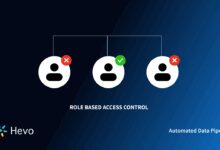
Top CRM platforms use end-to-end encryption to protect data both in transit and at rest. They also provide granular access controls, allowing administrators to define who can view, edit, or delete customer records.
- Role-based access control (RBAC)
- Multi-factor authentication (MFA)
- Activity logging and audit trails
For example, Salesforce offers Shield Platform Encryption and Event Monitoring to enhance security. Learn about Salesforce’s security features.
Compliance with Global Regulations
Enterprise CRMs must support compliance with data protection laws across regions. This includes tools for data anonymization, consent management, and data subject access requests (DSARs).
- GDPR-ready features like data portability and right to be forgotten
- CCPA compliance with opt-out mechanisms
- Regular third-party audits and certifications (e.g., SOC 2, ISO 27001)
Microsoft Dynamics 365, for instance, provides built-in compliance dashboards and data residency options. Explore Dynamics 365 compliance tools.
Integration of CRM Software for Enterprise Customer Data Management with Other Enterprise Systems
A CRM doesn’t operate in isolation. To maximize its value, it must integrate seamlessly with other enterprise systems such as ERP, marketing automation, e-commerce, and customer support platforms.
ERP and Financial System Integration
Integrating CRM with ERP systems like SAP or Oracle NetSuite ensures that sales, inventory, and financial data are synchronized.
- Automated order processing and invoicing
- Real-time inventory visibility for sales teams
- Unified customer view across sales and finance
For example, SAP CRM integrates natively with SAP S/4HANA, enabling end-to-end business process automation. Discover SAP CRM solutions.
Marketing Automation and Email Platforms
CRM software for enterprise customer data management works hand-in-hand with marketing tools like Marketo, HubSpot, or Pardot to deliver personalized campaigns.
- Synchronize lead data between CRM and marketing platforms
- Track campaign performance and ROI
- Automate lead scoring and nurturing workflows
Marketo Engage, now part of Adobe, offers deep CRM integrations for enterprise marketers. Learn more about Marketo.
Customer Support and Service Platforms
Integrating CRM with service platforms like Zendesk or ServiceNow ensures that customer issues are tracked, resolved, and followed up efficiently.
- Automatic ticket creation from CRM records
- Knowledge base integration for faster resolution
- Customer satisfaction (CSAT) tracking
ServiceNow’s CRM integration allows enterprises to manage service requests within a unified workflow. Explore ServiceNow CRM capabilities.
Measuring the ROI of CRM Software for Enterprise Customer Data Management
Investing in CRM software for enterprise customer data management is a significant decision. To justify the cost, enterprises must measure return on investment (ROI) through key performance indicators (KPIs).
Sales Performance Metrics
CRM systems provide detailed insights into sales team performance and pipeline health.
- Sales conversion rates
- Average deal size and sales cycle length
- Forecast accuracy
According to Nucleus Research, companies see an average ROI of $8.71 for every dollar spent on CRM. Read the full study.
Customer Satisfaction and Retention
CRM data helps track customer satisfaction and loyalty over time.
- Net Promoter Score (NPS)
- Customer retention rate
- First response and resolution time
Enterprises using CRM report a 27% increase in customer satisfaction, according to SuperOffice. View CRM statistics.
Operational Efficiency Gains
Automation and data centralization reduce manual work and errors.
- Time saved on data entry and reporting
- Reduction in duplicate efforts
- Improved cross-departmental collaboration
These efficiency gains translate into lower operational costs and faster decision-making.
Future Trends in CRM Software for Enterprise Customer Data Management
The CRM landscape is evolving rapidly, driven by AI, cloud computing, and changing customer expectations. Enterprises must stay ahead of these trends to remain competitive.
AI and Hyper-Personalization
Future CRM systems will leverage AI to deliver hyper-personalized experiences in real time.
- Dynamic content generation based on customer behavior
- Real-time sentiment analysis during customer interactions
- Predictive recommendations for products and services
For example, Salesforce’s Einstein GPT generates personalized emails and service responses using generative AI. Learn about Einstein GPT.
Blockchain for Data Integrity
Blockchain technology is emerging as a way to ensure data authenticity and prevent tampering in CRM systems.
- Immutable customer interaction logs
- Secure consent management
- Transparent audit trails
While still in early stages, blockchain could revolutionize how enterprises manage customer data trust.
Edge Computing and Real-Time Processing
As IoT devices and real-time analytics grow, CRM systems will process data at the edge—closer to the source—for faster insights.
- Real-time customer behavior tracking in physical stores
- Instant response to service requests from connected devices
- Reduced latency in data processing
This shift will enable enterprises to act faster and deliver more responsive customer experiences.
What is CRM software for enterprise customer data management?
CRM software for enterprise customer data management is a centralized platform that helps large organizations collect, organize, analyze, and act on customer data across sales, marketing, and service functions. It enables scalability, security, and integration with other enterprise systems.
How does CRM improve customer data security?
Enterprise CRM systems enhance security through encryption, role-based access control, audit trails, and compliance with regulations like GDPR and CCPA. They also offer tools for data anonymization and consent management.
Which CRM is best for large enterprises?
Salesforce, Microsoft Dynamics 365, and Oracle CX are among the top choices for large enterprises due to their scalability, integration capabilities, AI features, and global compliance support.
Can CRM software integrate with ERP systems?
Yes, leading CRM software for enterprise customer data management can integrate with ERP systems like SAP, Oracle, and Microsoft Dynamics to synchronize sales, inventory, and financial data.
What is the ROI of enterprise CRM software?
Enterprises typically see an ROI of $8 or more for every dollar spent on CRM, driven by increased sales, improved customer retention, and operational efficiency gains.
CRM software for enterprise customer data management is no longer a luxury—it’s a strategic imperative. From centralizing data and enhancing security to enabling AI-driven insights and seamless integrations, the right CRM empowers enterprises to build stronger customer relationships and drive sustainable growth. As technology evolves, staying ahead of trends like AI, blockchain, and edge computing will be key to maintaining a competitive edge. The future of customer experience is intelligent, integrated, and insight-driven—and the best CRM platforms are leading the way.
Further Reading:
